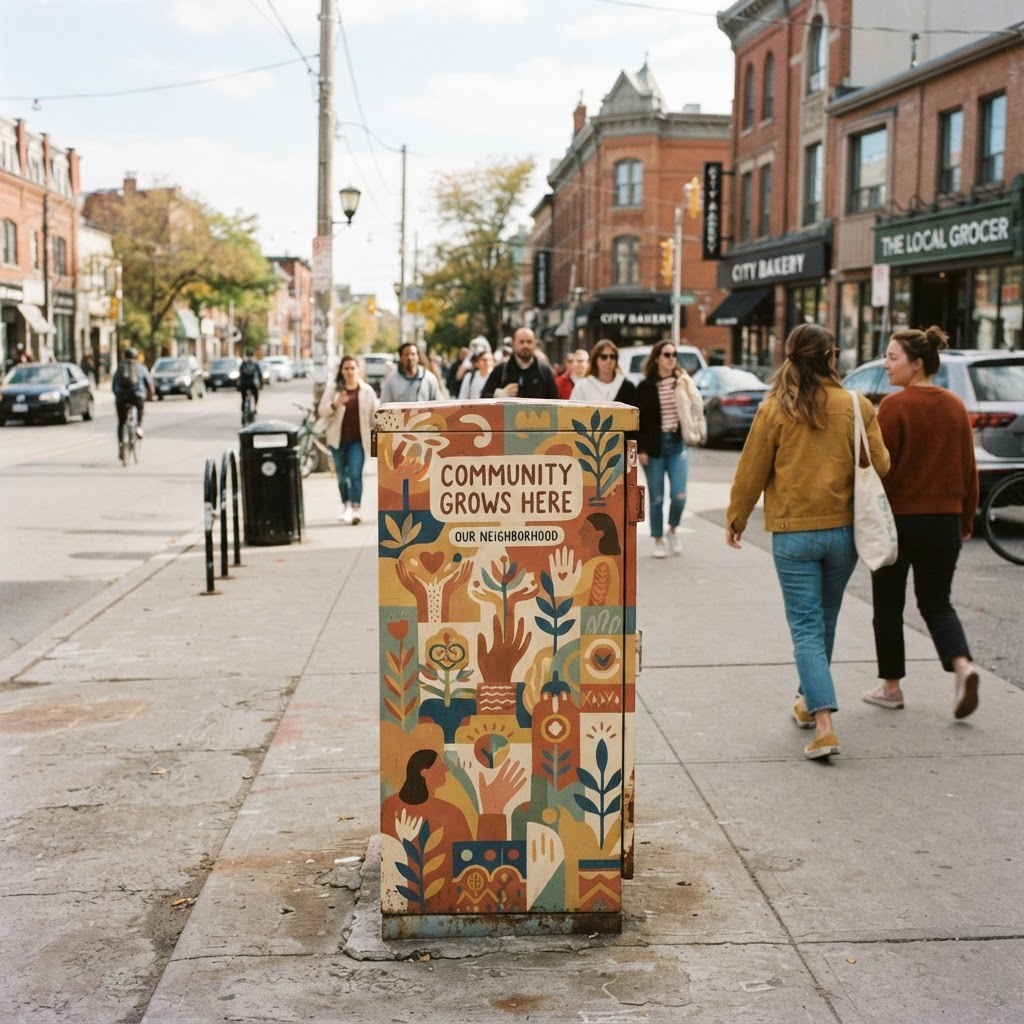
City / Region
Utility Box Art Program
Beautify streetscapes and showcase local artists on everyday infrastructure.
- Scale
- Editable: number of boxes or artists
- Takeaway
- What Alameda can learn: clear artist agreements and maintenance planning.
Explore the Proposal
Browse the full proposal in any order. Prefer a guided walkthrough?
Switch to the Guided Story01Discover
Why this initiative exists, what we believe, and the framework that holds it together.
Alameda is home to talented artists, creative young people, and neighborhoods ready for more visible public art. This initiative pairs experienced local artists with young people to collaboratively design and paint public artwork throughout the community.
The utility boxes are the first implementation of a broader vision. The project uses collaborative art as a catalyst for mentorship, creativity, community participation, and stronger intergenerational relationships — leaving behind not only public artwork, but a lasting network of artists, participants, neighborhoods, partners, and stories.
Each utility box becomes:
What makes it different
Many utility box mural programs focus primarily on beautification. This initiative begins with relationships. The murals are the visible result of a larger community experience involving mentorship, collaboration, learning, and shared accomplishment.
Public art becomes public connection.
These core beliefs shape every part of the initiative — from how teams are formed to how success is understood.
Public art should be measured not only by what we install, but by the relationships it creates.
Traditional public art leaves behind artwork. This initiative leaves behind artwork, relationships, stories, mentorship, and an evolving creative community.
The conversations, sketches, mentorship, shared experiences, and celebrations are as valuable as the finished mural itself.
Rather than simply decorating public infrastructure, each mural makes visible the people, relationships, creativity, and shared experiences that already exist within Alameda.
The program is framed around opportunity and connection — not deficits.
Young people spend much of their time surrounded by screens, information, and digital communication. They benefit from opportunities for hands-on creativity, mentorship, personal connection, and meaningful participation in their community.
Experienced artists possess knowledge, stories, and creative perspectives that can inspire younger people — and a meaningful way to contribute to Alameda's artistic legacy.
Public artwork made together becomes a shared landmark: a visible reminder that this community invests in its people and its streets.
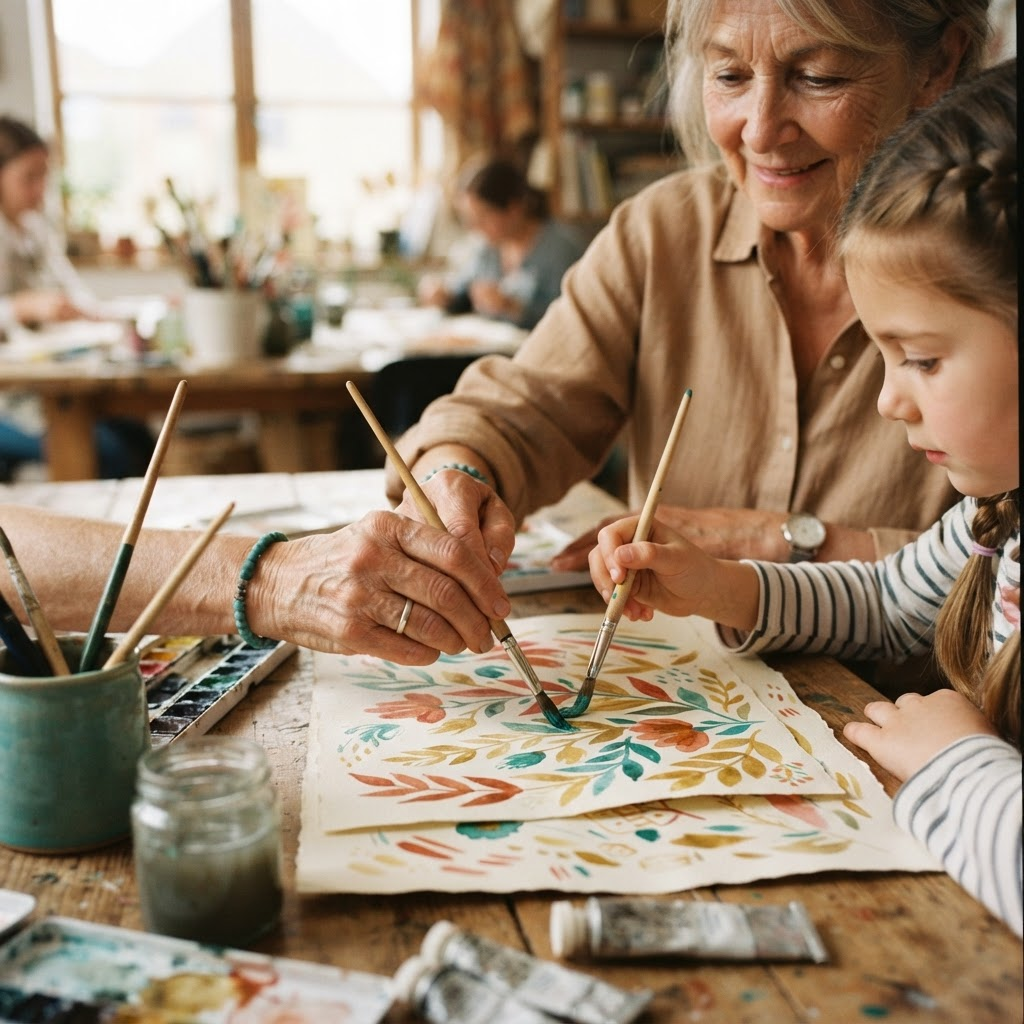
This is a positive, strengths-based program. It does not make medical claims or present digital communication as the sole cause of youth stress.
Every project — beginning with utility boxes — advances the same four goals. They keep the initiative focused on people, not just paint.
Bring together artists, youth, neighborhoods, organizations, businesses, volunteers, and families.
Teach artistic techniques, share knowledge, build confidence, and develop future leaders.
Collaboratively design and paint public artwork — and celebrate creativity together.
Expand relationships, knowledge, and future opportunities, strengthening Alameda's creative ecosystem.
02Learn
Building local knowledge that stays in Alameda long after the paint dries.
Building local capacity is a primary objective. We recruit two to three experienced mural or utility-box artists to serve as Community Art Mentors.
Rather than painting every box themselves, mentors teach others.
The result is a growing group of confident local artists — including young people — who can lead future public art projects.
Several free workshops welcome everyone involved — and anyone curious. Every participant leaves with new, practical skills.
Knowledge is shared throughout the community rather than held by a few.
Each completed project documents how it was made, so the city develops institutional knowledge instead of repeating the same learning process each time.
Over time, Alameda builds a shared library of practical know-how that makes every future public art effort faster, safer, and more durable.
03Collaborate
How teams form, engage neighborhoods, and develop concepts side by side.
Select a stage to see what happens, who takes part, and what it produces.
Confidence, mentorship, and a visible sense of accomplishment.
04Create
Bringing collaborative artwork into public space and celebrating it together.
8–10
Utility boxes
6–8
Experienced local artists
8–16
Youth participants
Artist-and-youth teams or small groups
Structure
One neighborhood or defined area
Area
~3–4 months
Program cycle
Public unveiling or community art walk
Closing event
Preliminary values. These values are preliminary and subject to collaboration with the Arts Commission, city staff, utility owners, artists, schools, and community partners.
The model is proven. The intergenerational experience is what makes this initiative distinct.
City / Region
Beautify streetscapes and showcase local artists on everyday infrastructure.
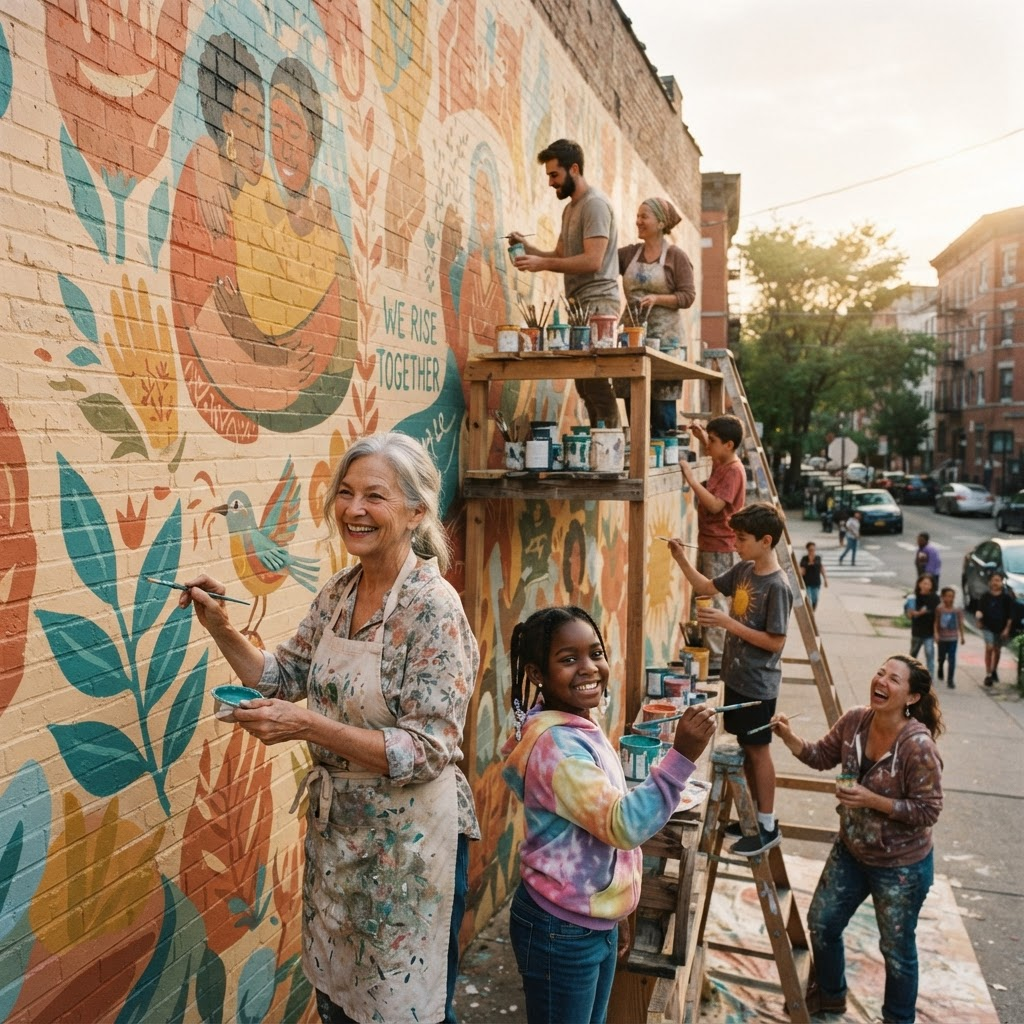
City / Region
Engage residents in creating public artwork that reflects local identity.
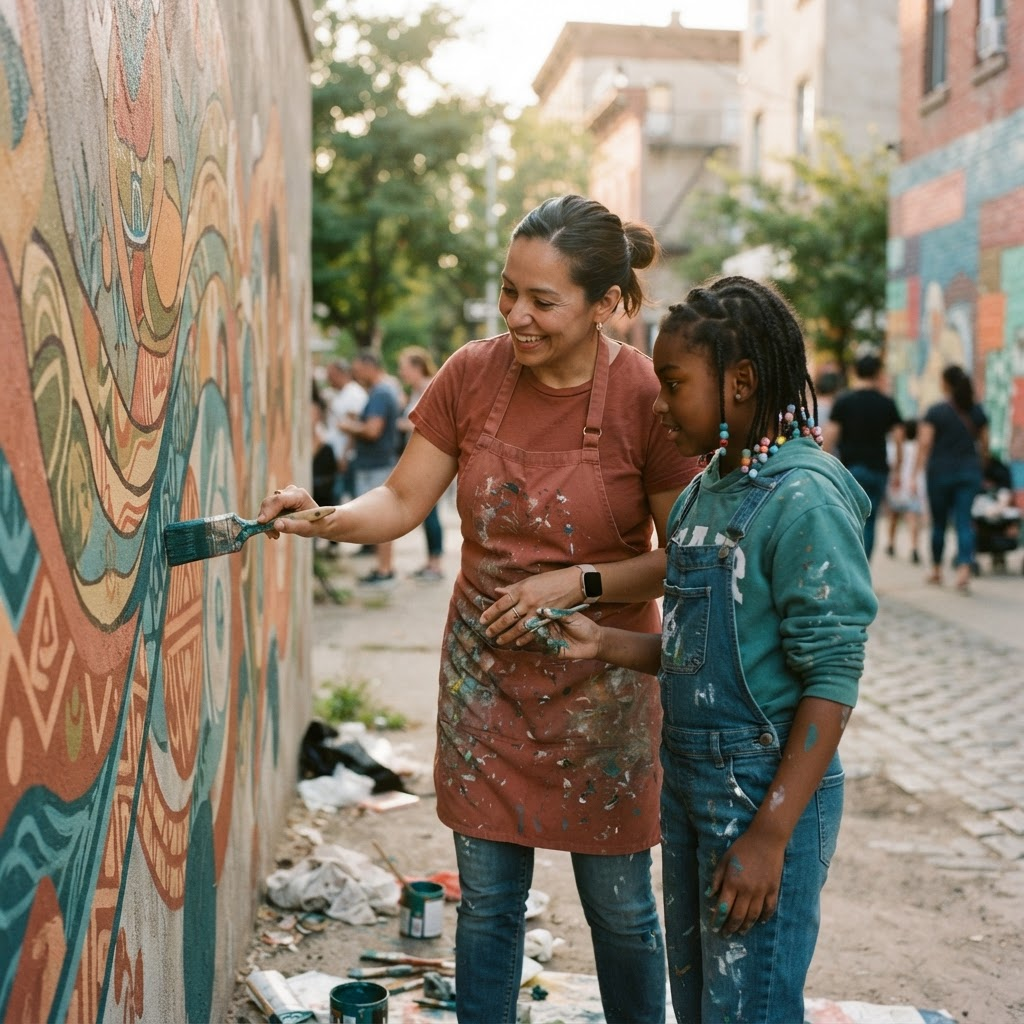
City / Region
Pair emerging and established artists to mentor through public projects.
Early phase
Early phase
Ramp-up
Ramp-up
Mid phase
Mid phase
Production
Closing
Wrap-up
Durations are approximate. Exact calendar dates will be set with the city and partners.
05Grow
A living network that grows stronger with every project and every relationship.
Each completed artwork becomes another node in a city-wide network. Every new mural strengthens that network by creating new relationships and opportunities for collaboration.
The emphasis always remains on people rather than technology.
Proposed as a future enhancement following a successful pilot
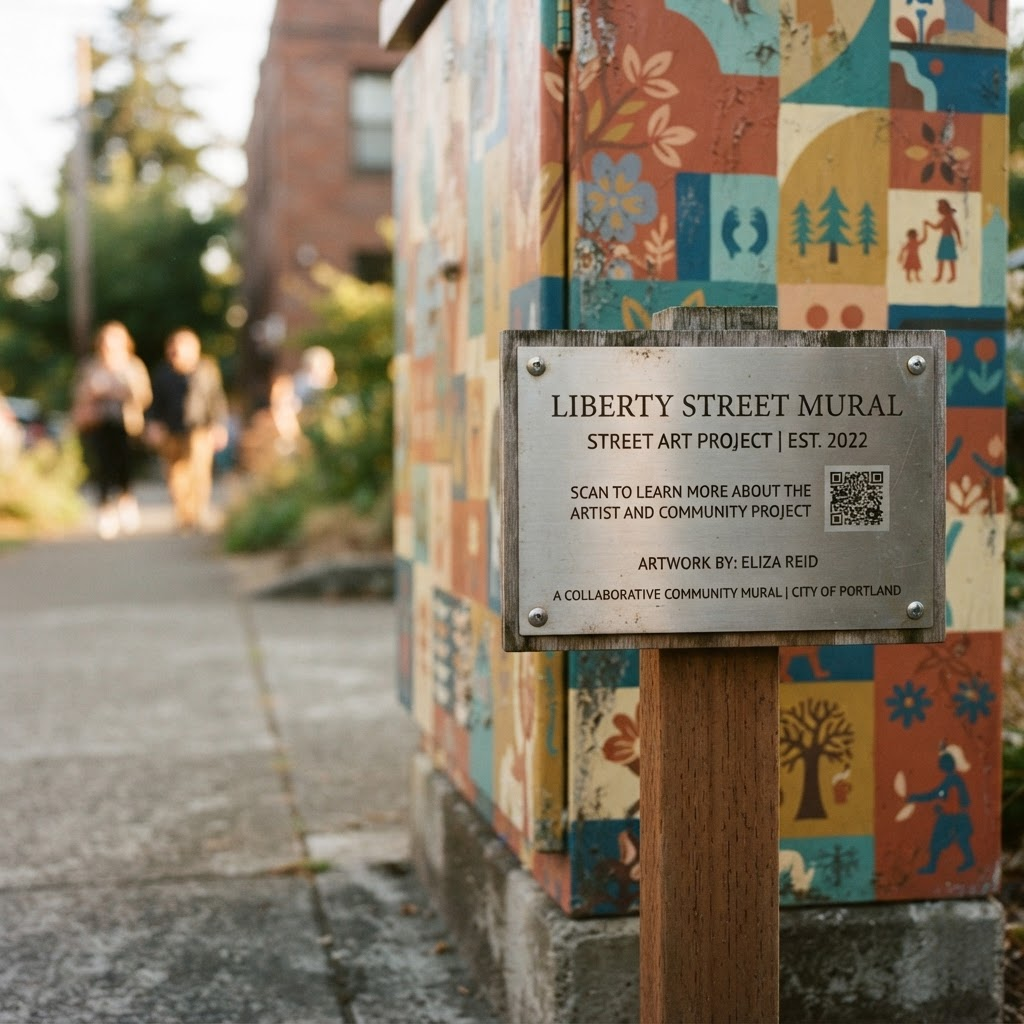
Each utility box can include a small interpretive plaque with a discreet QR code. It should never feel like advertising. Instead, it functions as a doorway into the community story behind the artwork.
Imagine someone scanning a mural ten years after it was completed. They can still discover who created it, why it was painted, what inspired the design, what participants learned, and how the neighborhood contributed. The website becomes a living archive of Alameda's creative community.
Most public art programs measure outputs. This initiative adds another way of understanding success: measuring relationships alongside artwork.
What most programs count
How we understand community health
These metrics are not intended as surveillance or performance measures. They exist to help understand the health and growth of Alameda's creative community over time.
A future phase as the initiative grows
As the initiative grows, the platform can evolve into an optimistic, community-focused dashboard — not an analytical or corporate one. Its purpose is to help the Commission understand how public art is strengthening community connections.
Additional views could include
Illustrative figures shown for demonstration only.
Potential Community Partners
These categories are potential collaborators. Participation has not yet been confirmed.
Sponsors are presented as community partners rather than advertisers. Each artwork page may acknowledge the organizations that helped make a project possible — without commercial branding or advertising language.
Supported by
Local Business Name
Helping create opportunities for community art in Alameda.
Every component is designed to advance the Commission's goals — not as a checklist, but woven throughout the program.
Pairing and mentor networks create lasting relationships between established and emerging artists.
Community Art Mentors and free workshops teach durable skills that stay in Alameda.
Open workshops and public celebrations are free and welcome to all residents.
Documented knowledge and a scalable framework prepare the city for future installations.
Neighborhood discovery, volunteers, and families are built into every project.
Artwork lives on everyday streets, with a digital companion that opens each story to everyone.
Recruitment reaches intentionally across neighborhoods, generations, and backgrounds.
The same participation model could eventually support many forms of public art. The platform is designed to grow without a major redesign — an evolving model for community participation, not a one-time mural project.
They should not think
“This is a proposal to paint utility boxes.”
They should think
“This is a new way for Alameda to build community through public art.”
This proposal does not assume the logistics are resolved. We are asking for partnership and guidance on:
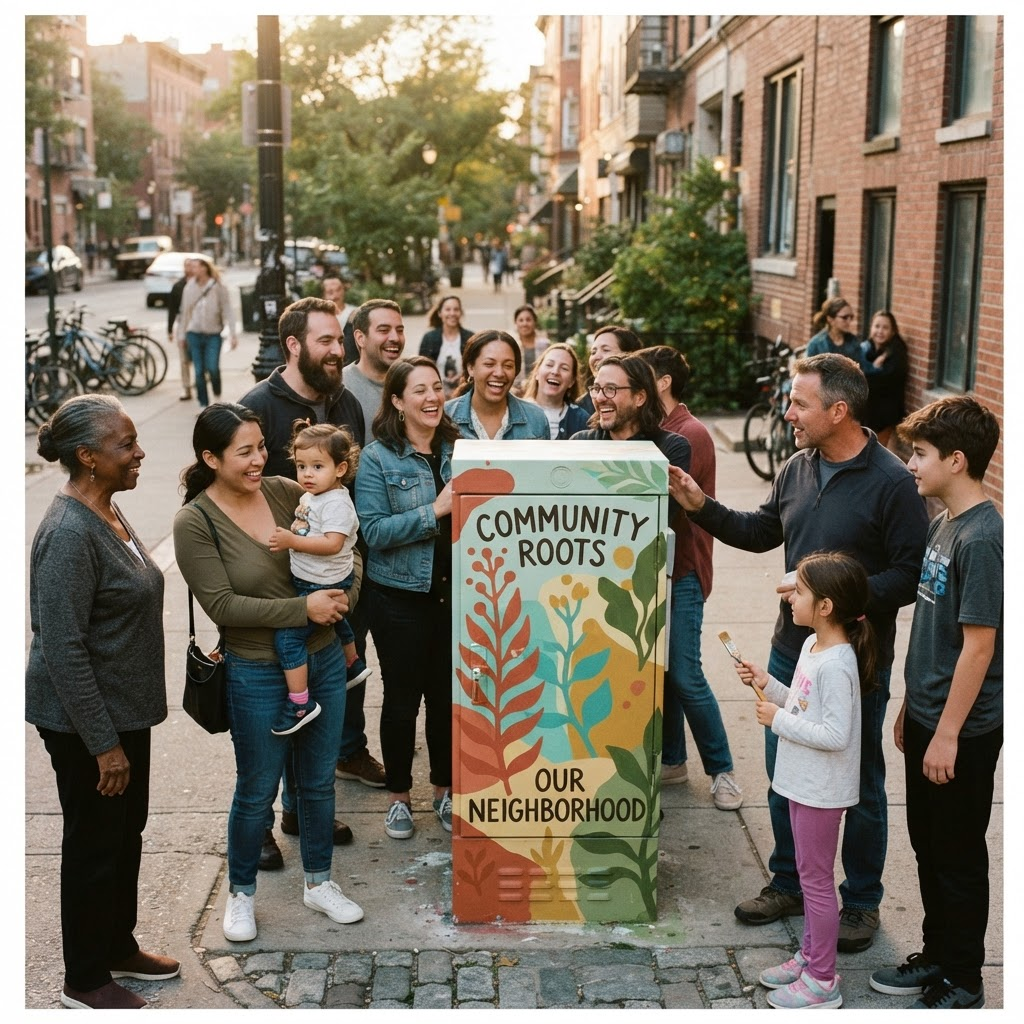
Help us develop a pilot that connects generations and brings more community-created art into Alameda's public spaces.