A proposal for Alameda, California
Generations in Color
An Intergenerational Public Art Initiative
A framework for building community through public art. We pair experienced local artists with young people to design and paint public artwork across Alameda — starting with utility boxes.
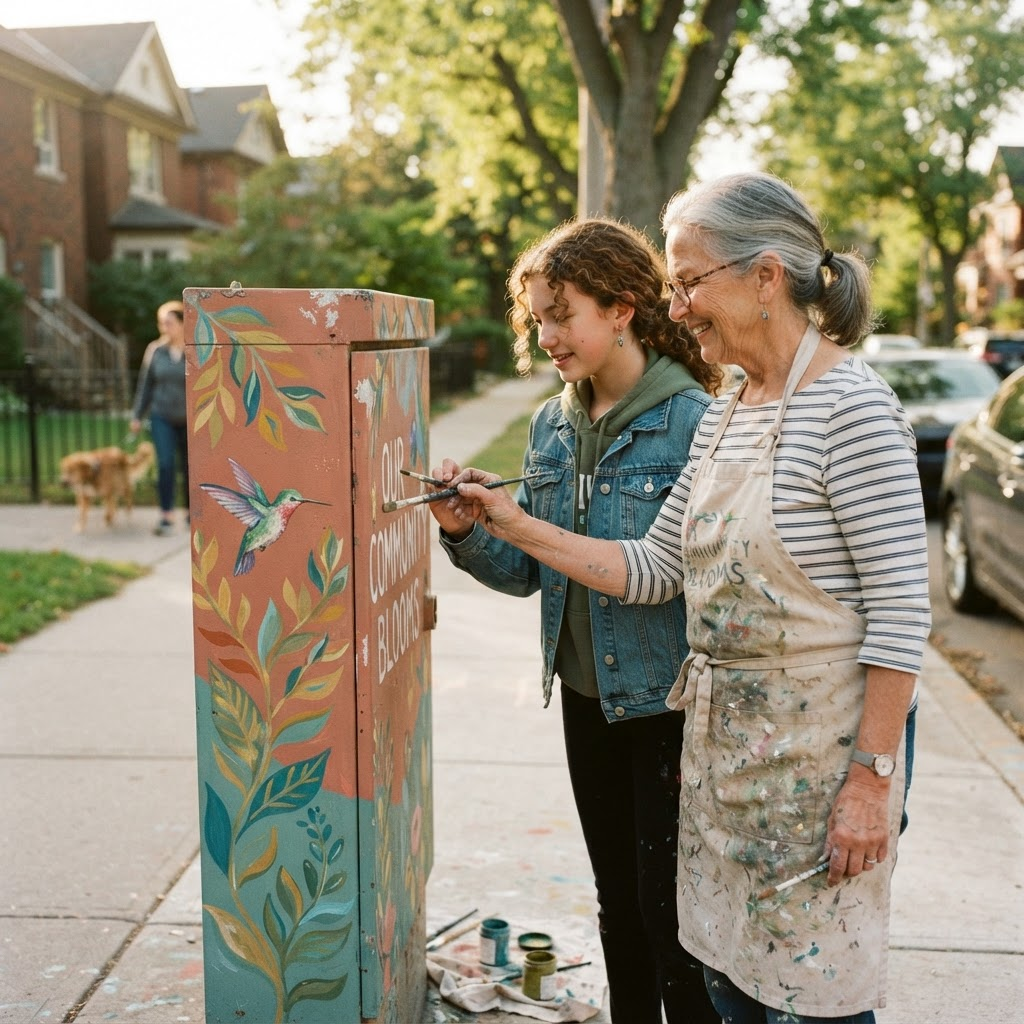
Creating art. Building relationships. Strengthening community.
Public art is often measured by what we install. We believe it should also be measured by the relationships it creates.
Presented to the Alameda Arts Commission & City Stakeholders. Project name is provisional and easy to change.
Discover — 01 · The Idea
This isn't a utility box project. It's a framework for building community through art.
Alameda is home to talented artists, creative young people, and neighborhoods ready for more visible public art. This initiative pairs experienced local artists with young people to collaboratively design and paint public artwork throughout the community.
The utility boxes are the first implementation of a broader vision. The project uses collaborative art as a catalyst for mentorship, creativity, community participation, and stronger intergenerational relationships — leaving behind not only public artwork, but a lasting network of artists, participants, neighborhoods, partners, and stories.
Each utility box becomes:
- • A collaborative canvas
- • A mentorship opportunity
- • A neighborhood landmark
- • An expression of local identity
- • A story created between generations
Public art becomes public connection.
Many utility box mural programs focus primarily on beautification. This initiative begins with relationships. The murals are the visible result of a larger community experience involving mentorship, collaboration, learning, and shared accomplishment.
02 · Guiding Philosophy
What we believe
Public art should be measured not only by what we install, but by the relationships it creates.
The relationships are the outcome
Traditional public art leaves behind artwork. This initiative leaves behind artwork, relationships, stories, mentorship, and an evolving creative community.
The process is part of the artwork
The conversations, sketches, mentorship, shared experiences, and celebrations are as valuable as the finished mural itself.
The artwork reveals the community
Rather than simply decorating public infrastructure, each mural makes visible the people, relationships, creativity, and shared experiences that already exist within Alameda.
03 · Why It Matters
Why it matters
For young people
Young people spend much of their time surrounded by screens, information, and digital communication. They benefit from opportunities for hands-on creativity, mentorship, personal connection, and meaningful participation in their community.
For experienced artists
Experienced artists possess knowledge, stories, and creative perspectives that can inspire younger people — and a meaningful way to contribute to Alameda's artistic legacy.
For the neighborhood
Public artwork made together becomes a shared landmark: a visible reminder that this community invests in its people and its streets.
This is a positive, strengths-based program. It does not make medical claims or present digital communication as the sole cause of youth stress.
04 · Four Program Pillars
Four pillars hold the framework together.
Every project — beginning with utility boxes — advances the same four goals. They keep the initiative focused on people, not just paint.
Connect
Bring together artists, youth, neighborhoods, organizations, businesses, volunteers, and families.
Learn
Teach artistic techniques, share knowledge, build confidence, and develop future leaders.
Create
Collaboratively design and paint public artwork — and celebrate creativity together.
Grow
Expand relationships, knowledge, and future opportunities, strengthening Alameda's creative ecosystem.
Learn — 05 · Community Art Mentors
We aim to leave behind more knowledge than we found.
Building local capacity is a primary objective. We recruit two to three experienced mural or utility-box artists to serve as Community Art Mentors.
Rather than painting every box themselves, mentors teach others.
Mentors provide:
- • Technical demonstrations
- • Coaching
- • Consultation
- • Quality guidance
- • One-on-one mentorship
The result is a growing group of confident local artists — including young people — who can lead future public art projects.
06 · Community Workshops
Free workshops, open to the whole community.
Several free workshops welcome everyone involved — and anyone curious. Every participant leaves with new, practical skills.
Open to: Participating artists, Youth participants, Volunteers, Interested community members
Suggested topics:
- • Preparing utility boxes
- • Cleaning & sanding
- • Priming
- • Paint selection
- • Brushes & rollers
- • Weather considerations
- • Public safety
- • Masking
- • Sealing
- • Maintenance
- • Documenting artwork
Knowledge is shared throughout the community rather than held by a few.
07 · Knowledge Sharing
Every artwork becomes a resource for the next.
Each completed project documents how it was made, so the city develops institutional knowledge instead of repeating the same learning process each time.
Each artwork records:
- • Materials used
- • Primer
- • Paint system
- • Sealer
- • Estimated hours
- • Lessons learned
- • Tips for future artists
Over time, Alameda builds a shared library of practical know-how that makes every future public art effort faster, safer, and more durable.
Collaborate — 08 · How Teams Work Together
The program journey, in seven stages.
1. Recruit
Invite experienced local artists and youth participants through schools, community organizations, arts groups, and neighborhood partners.
Who: Program organizers, schools, arts and community partners. Outcome: A pool of artists and young people ready to collaborate.
2. Pair
Create artist-and-youth teams based on interests, availability, experience, and compatibility.
Who: Program coordinators, artists, and youth participants. Outcome: Balanced teams or small groups ready to begin.
3. Discover
Teams meet, explore community themes, learn about the neighborhood, and discuss what they want their mural to communicate.
Who: Artist-and-youth teams, with community input. Outcome: A shared creative direction rooted in the community.
4. Design
Each team develops a mural concept together, with the experienced artist providing guidance rather than creating the design alone.
Who: Artist-and-youth teams. Outcome: A finished, collaborative mural concept.
5. Review
Designs are reviewed for safety, feasibility, community appropriateness, accessibility, and city requirements.
Who: City staff, Arts Commission, and program organizers. Outcome: Approved designs cleared for painting.
6. Paint
Teams prepare and paint their assigned utility boxes with appropriate materials, supervision, and site-safety procedures.
Who: Artist-and-youth teams with supervision. Outcome: Completed murals on utility boxes.
7. Celebrate
Hold a public unveiling or community art walk to recognize participants and share the stories behind the murals.
Who: Participants, families, partners, and the community. Outcome: Public recognition and a shared community moment.
09 · Community Benefits
Benefits for everyone who takes part.
For young people
Confidence, mentorship, and a visible sense of accomplishment.
- • Creative confidence
- • Mentorship
- • Collaboration skills
- • Community participation
- • Experience completing a public project
- • A visible sense of accomplishment
For experienced artists
A meaningful way to share knowledge and shape Alameda's legacy.
- • An opportunity to share knowledge
- • Recognition within the community
- • New creative perspectives
- • Meaningful engagement with younger generations
- • A way to contribute to Alameda's artistic legacy
For the community
More public art and stronger intergenerational relationships.
- • More public art
- • Stronger intergenerational relationships
- • Neighborhood identity and pride
- • More engaging pedestrian environments
- • Recognition of local artists and young creators
- • A shared community story
Create — 10 · The Pilot Program
A realistic first-phase pilot.
- Utility boxes
- 8–10
- Experienced local artists
- 6–8
- Youth participants
- 8–16
- Structure
- Artist-and-youth teams or small groups
- Area
- One neighborhood or defined area
- Program cycle
- ~3–4 months
- Closing event
- Public unveiling or community art walk
Preliminary values. These values are preliminary and subject to collaboration with the Arts Commission, city staff, utility owners, artists, schools, and community partners.
11 · Inspiration & Precedents
Utility box mural programs in other cities.
The model is proven. The intergenerational experience is what makes this initiative distinct.
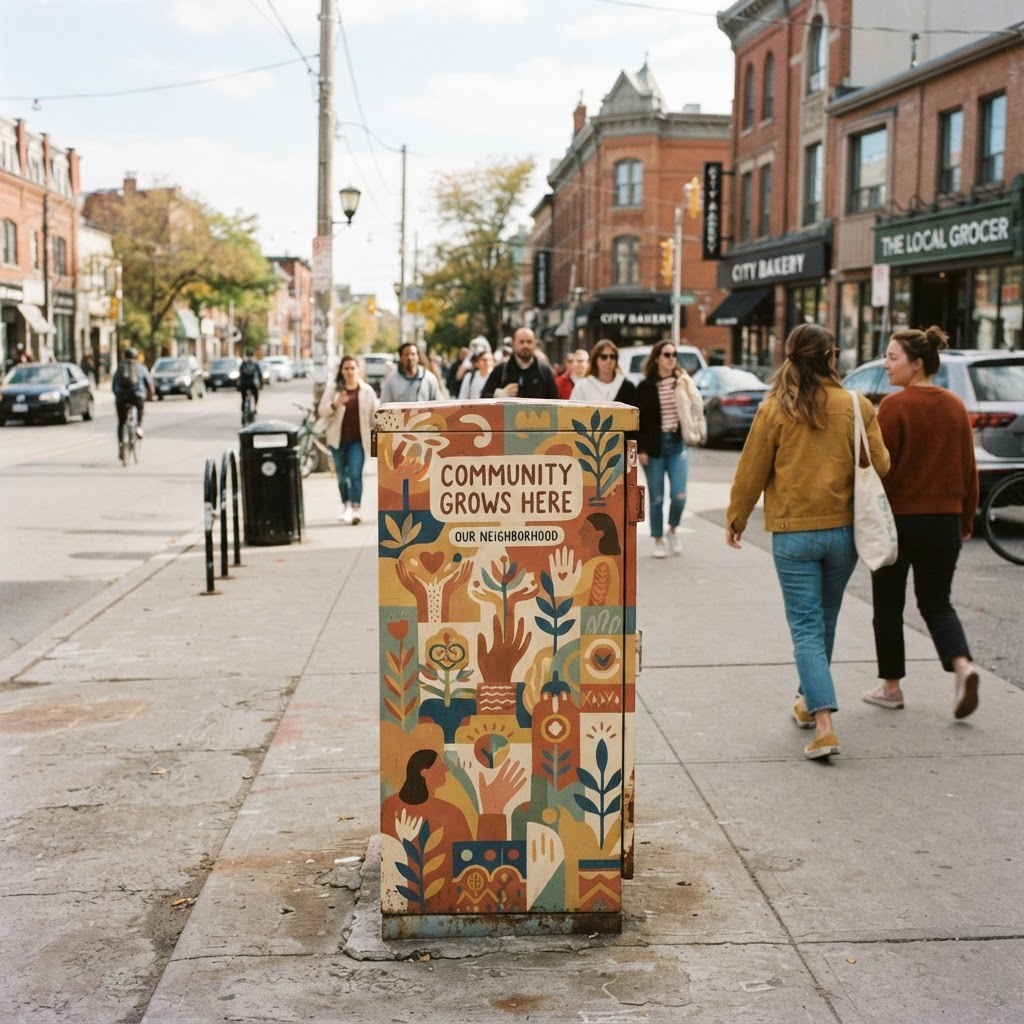
City / Region
Utility Box Art Program
Beautify streetscapes and showcase local artists on everyday infrastructure.
What Alameda can learn: clear artist agreements and maintenance planning.
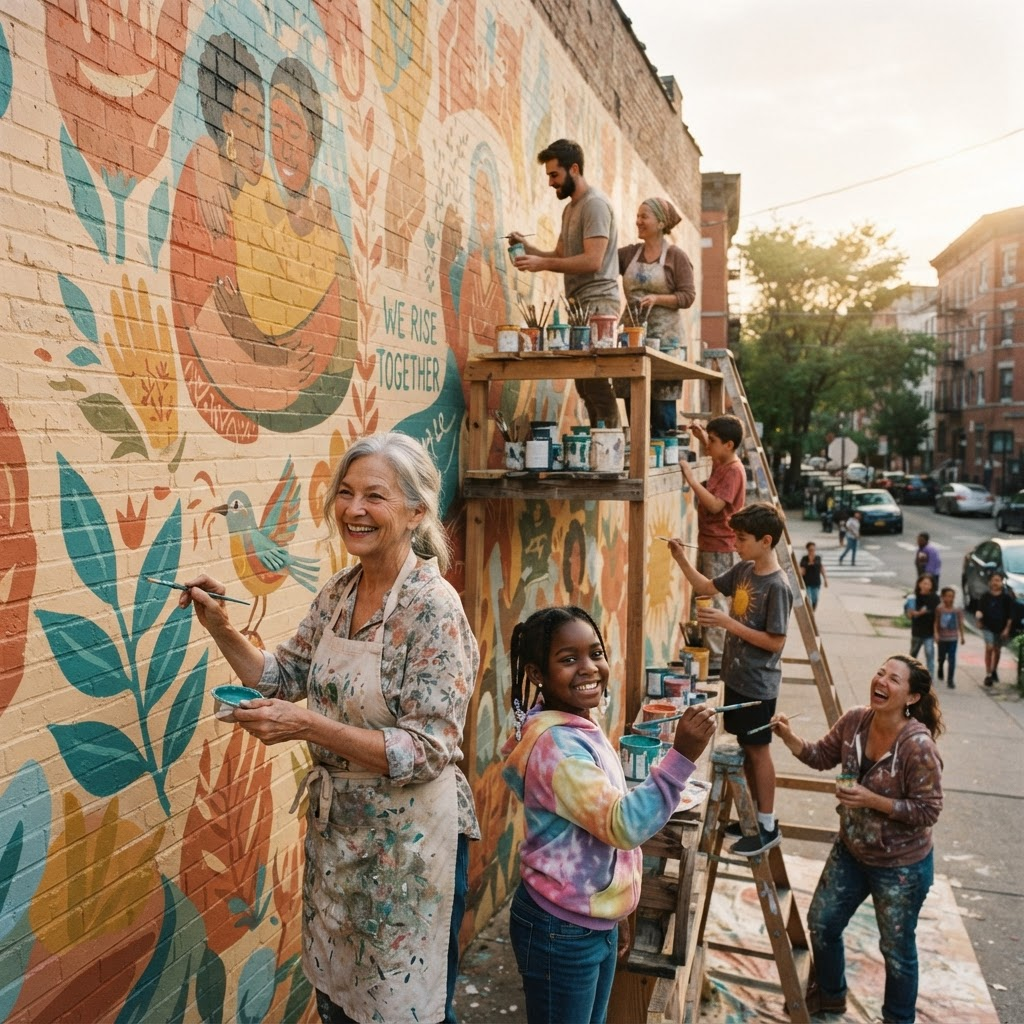
City / Region
Community Mural Initiative
Engage residents in creating public artwork that reflects local identity.
What Alameda can learn: neighborhood input strengthens community buy-in.
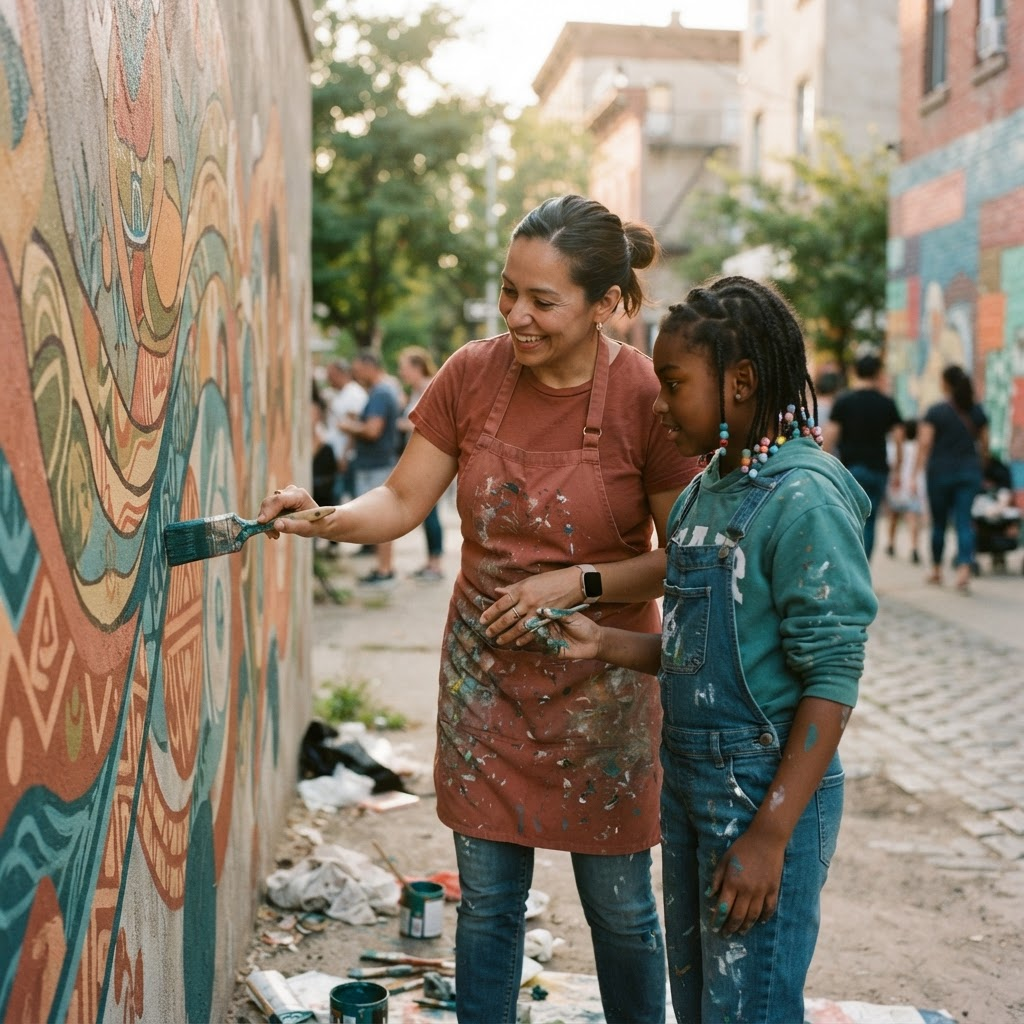
City / Region
Youth + Artist Public Art
Pair emerging and established artists to mentor through public projects.
What Alameda can learn: mentorship structure keeps youth engaged to completion.
12 · Timeline
A phased path.
- 1.City and partner alignment (Early phase)
- 2.Site identification and permissions (Early phase)
- 3.Artist and youth recruitment (Ramp-up)
- 4.Pairing and orientation (Ramp-up)
- 5.Community discovery and concept development (Mid phase)
- 6.Design review and approval (Mid phase)
- 7.Surface preparation and painting (Production)
- 8.Community unveiling (Closing)
- 9.Evaluation and recommendations (Wrap-up)
Durations are approximate. Exact calendar dates will be set with the city and partners.
Grow — 13 · Community Knowledge Network
A growing cultural network, not a collection of murals.
Each completed artwork becomes another node in a city-wide network. Every new mural strengthens that network by creating new relationships and opportunities for collaboration.
Each artwork connects:
- • Artists
- • Youth participants
- • Neighborhoods
- • Schools
- • Community organizations
- • Volunteers
- • Sponsors
- • Residents
The emphasis always remains on people rather than technology.
14 · Digital Companion
Every mural becomes a doorway to its story.
Proposed as a future enhancement following a successful pilot
Each utility box can include a small interpretive plaque with a discreet QR code. It should never feel like advertising. Instead, it functions as a doorway into the community story behind the artwork.
Scanning opens a dedicated page for that specific artwork, which may include:
- • Artist & youth participant profiles
- • Artist statement
- • Why this mural was created
- • Neighborhood story
- • Sketches & concept drawings
- • Photos of the creative process
- • Time-lapse video
- • Community partners & sponsors
- • Volunteer recognition
- • Nearby murals & walking tour
- • Ways to participate in future projects
A living archive. Imagine someone scanning a mural ten years after it was completed. They can still discover who created it, why it was painted, what inspired the design, what participants learned, and how the neighborhood contributed. The website becomes a living archive of Alameda's creative community.
15 · Measuring Community
Measure relationships, not just artwork.
Most public art programs measure outputs. This initiative adds another way of understanding success: measuring relationships alongside artwork.
Traditional outputs
- • Number of murals
- • Number of artists
- • Dollars invested
- • Square footage painted
Measuring relationships
- • Returning youth participants
- • Youth who later become mentors
- • Returning artists
- • New artist collaborations
- • Volunteer participation
- • Community partnerships
- • Community events
- • Story engagement
- • Walking tour participation
- • Neighborhood participation
These metrics are not intended as surveillance or performance measures. They exist to help understand the health and growth of Alameda's creative community over time.
16 · Community Dashboard
A community dashboard for the Arts Commission.
A future phase as the initiative grows
As the initiative grows, the platform can evolve into an optimistic, community-focused dashboard — not an analytical or corporate one. Its purpose is to help the Commission understand how public art is strengthening community connections.
- Participating artists
- 24
- Youth participants
- 38
- Completed murals
- 17
- Returning mentors
- 9
- Community partners
- 12
- Community events
- 6
Illustrative figures shown for demonstration only.
17 · Partners & Sponsors
Potential Community Partners
- • Alameda Arts Commission
- • City departments and utility owners
- • Alameda Unified School District
- • Local middle and high schools
- • Youth-serving organizations
- • Local arts organizations
- • Experienced and retired artists
- • Neighborhood associations
- • Local businesses
- • Community foundations
- • Volunteers and families
These categories are potential collaborators. Participation has not yet been confirmed.
Sponsors as community partners
Sponsors are presented as community partners rather than advertisers. Each artwork page may acknowledge the organizations that helped make a project possible — without commercial branding or advertising language.
18 · Commission Alignment
Built around the Arts Commission's priorities.
Every component is designed to advance the Commission's goals — not as a checklist, but woven throughout the program.
Professional connections among artists
Pairing and mentor networks create lasting relationships between established and emerging artists.
Building local artist capacity
Community Art Mentors and free workshops teach durable skills that stay in Alameda.
Expanding free community programming
Open workshops and public celebrations are free and welcome to all residents.
Supporting future public art sites
Documented knowledge and a scalable framework prepare the city for future installations.
Community participation
Neighborhood discovery, volunteers, and families are built into every project.
Accessible public art
Artwork lives on everyday streets, with a digital companion that opens each story to everyone.
Cultural equity and inclusion
Recruitment reaches intentionally across neighborhoods, generations, and backgrounds.
19 · Long-Term Vision
Utility boxes are just the beginning.
The same participation model could eventually support many forms of public art. The platform is designed to grow without a major redesign — an evolving model for community participation, not a one-time mural project.
- • Murals
- • Sculptures
- • Park installations
- • Mosaic projects
- • Temporary exhibitions
- • Community gardens
- • School collaborations
- • Public performances
- • Future public art initiatives
20 · Approval & Next Steps
We are seeking Arts Commission support to explore and develop a pilot.
This proposal does not assume the logistics are resolved. We are asking for partnership and guidance on:
- • Program feasibility
- • Utility box ownership and permissions
- • Site selection
- • Public-art review requirements
- • Youth participation and safety
- • Artist selection
- • Funding opportunities
- • Maintenance and anti-graffiti considerations
- • Potential city and community partners
Help us develop a pilot that connects generations and brings more community-created art into Alameda's public spaces.